
One platform. Multiple processes. More research possibilities.
HARV-E brings configurable bioprinting hardware and coordinated processing capabilities together to support academic research.
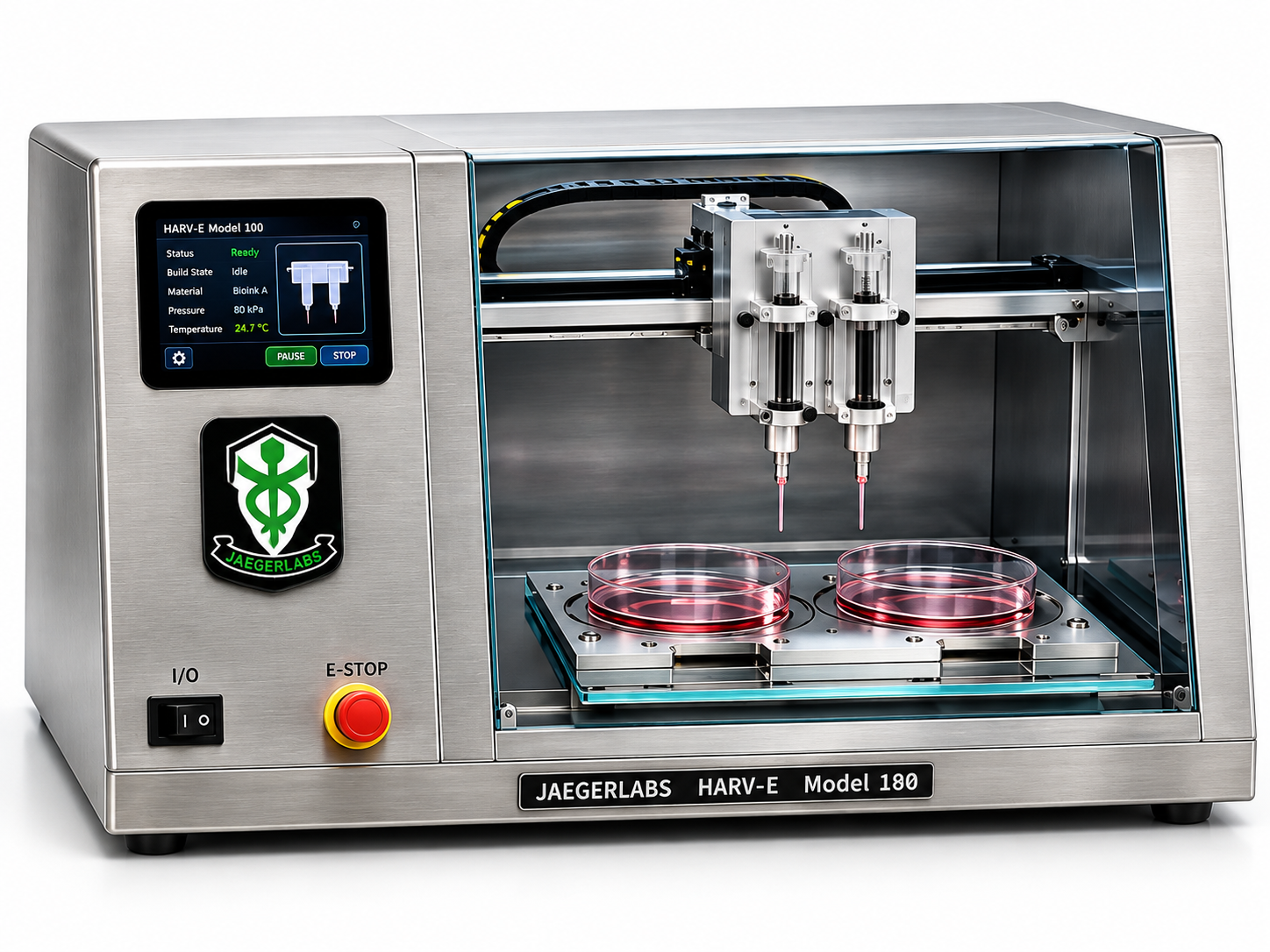
Biofabrication is more than printing.
Materials, deposition, treatment, calibration and documentation often require separate tools and procedures. Each additional handoff adds work for busy researchers.
Multiple processes
Coordinating formulation, digital design, deposition and treatment requires considerable planning.
Manual handoffs
Moving between instruments can introduce operational complexity and opportunities for variability.
Repeatability matters
Research teams need a practical way to capture what was done so workflows can be revisited and refined.
Integrated hardware. Configurable research workflows.
HARV-E is being developed to bring supported extrusion, material treatment and experimental process steps into a coordinated laboratory system.
- Hydrogel extrusion and adaptable sample geometries
- Configurable processing options by system
- Training and application-specific technical discussion
- An evolving digital workflow and documentation platform
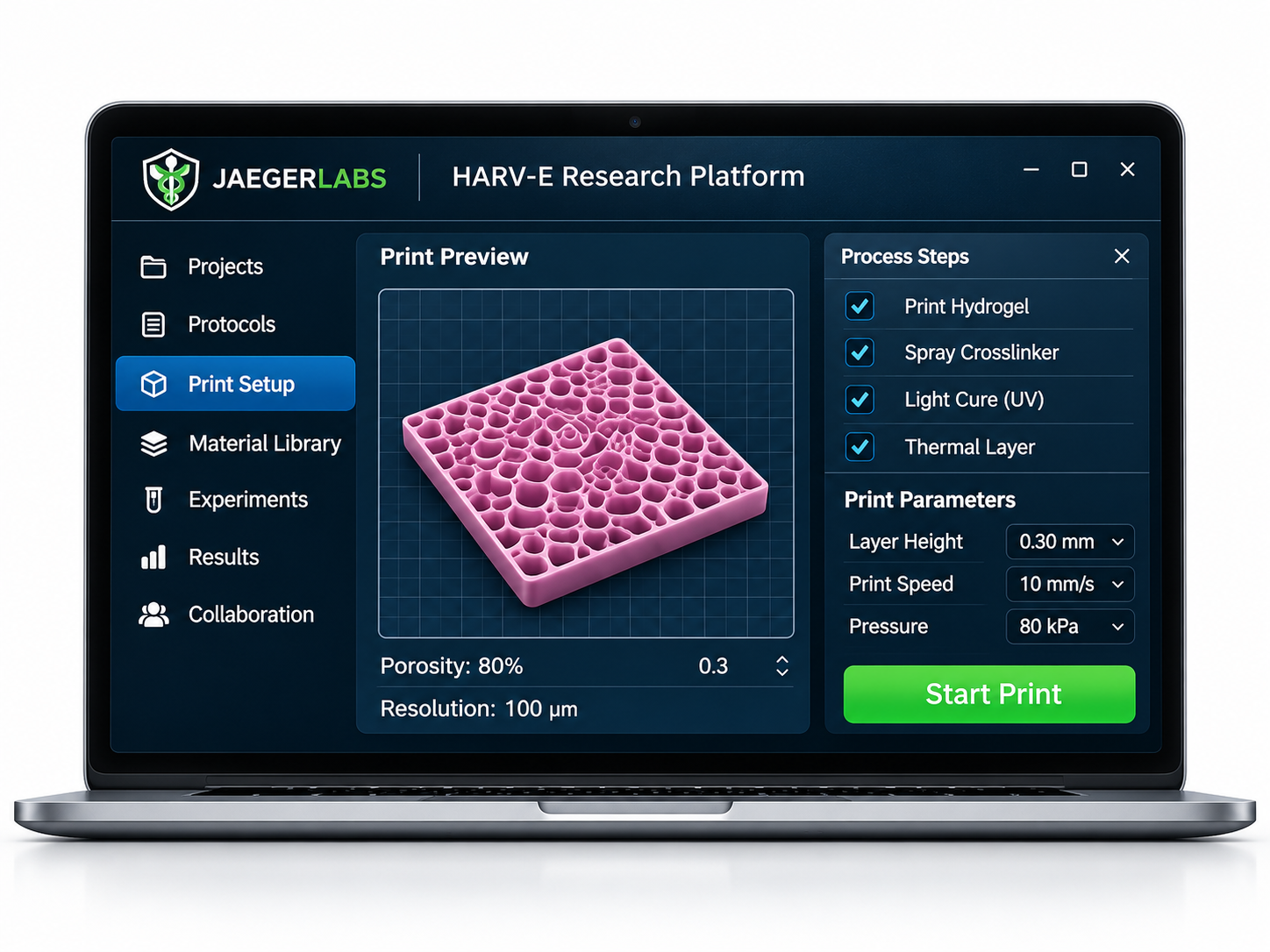
Built around the questions your laboratory is asking.
We begin with the experiment, then evaluate technical fit. Application areas below represent research directions and are not claims of validated biological outcomes.
Biomaterials and scaffolds
Explore extrusion geometries, hydrogels, material combinations and processing steps.
Veterinary and biological research
Produce research samples and develop protocols aligned with laboratory objectives.
Tissue and disease models
Evaluate potential fabrication approaches for early-stage experimental constructs.
Early experience in a real research environment.
In August 2026, a HARV-E prototype was delivered to Tuskegee University College of Veterinary Medicine for research evaluation. Following approximately 2–3 hours of training, an operator produced about 25 hydrogel coupons in a single day.
Read the research storyhydrogel coupons produced in one day after initial operator training
approximately the initial training duration
Tell us what you’re researching.
Schedule a Zoom conversation to discuss your research objectives, technical needs and whether a HARV-E configuration is a fit.